
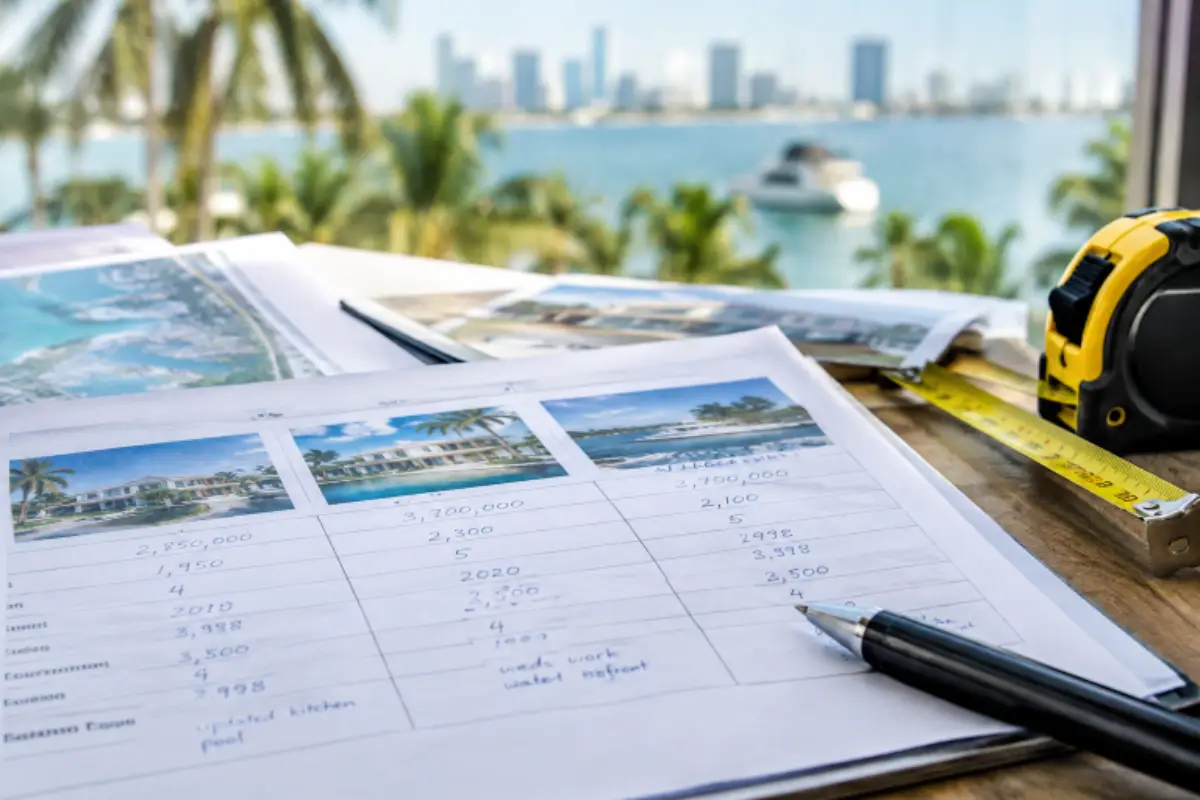
Making an offer in Miami Beach is about more than deciding whether a home looks right in listing photos. Salt air, waterfront exposure, condo governance, renovation history, parking, and neighborhood rhythms can all shape a property’s practical value. Buyers comparing homes for sale in Miami Beach can use Carmenate / Duchon’s local property guide as a useful starting point for viewing the range of residences across South Beach, Mid-Beach, North Beach, the Venetian Islands, and nearby waterfront communities.
Carmenate / Duchon focuses on Miami Beach real estate, including design-led residences, waterfront homes, and condominium properties where building quality and ownership costs can matter as much as square footage. Before submitting an offer, turn the information in the listing into a set of questions that can be answered with records, inspections, comparable sales, and written estimates.
Start With The Property, Not The Listing Price
An asking price is a seller’s position, not a complete valuation. Compare the home’s usable size, bedroom layout, condition, views, outdoor space, parking, storage, building services, and exact location. A broad Miami Beach median or average may be far less useful than sales from the same building, block, or waterfront setting.
Keep three figures separate: the asking price, recent closed-sale evidence, and the value an appraiser may support for a lender. They can overlap, but they are not automatically the same number.
Compare Recent Sales That Truly Match
Start with recent closed sales in the same building whenever possible. For houses, look for nearby properties with similar lot characteristics, water access, condition, and architectural appeal. Then adjust for meaningful differences rather than treating every nearby sale as interchangeable.
A unit a few blocks away may be a weak comparison if it has different beach access, building amenities, rental rules, or a substantially different view. Unique architecture, historic details, and direct waterfront placement may also require more careful judgment.
- Property type and interior square footage
- Bedroom and bathroom count
- Floor level, exposure, views, and balcony or yard space
- Parking, storage, boat access, or dock rights
- Renovation quality, age, and permitted improvements
- Days on market and any price reductions
Review the full cost of ownership before choosing an offer amount. Build a monthly estimate that includes the mortgage payment, property taxes, insurance, association dues, maintenance, utilities, and potential assessments.
Review The Full Cost Of Ownership
Build a monthly estimate before choosing an offer amount. The mortgage payment is only one line item. Request insurance estimates early, because coverage availability, deductibles, and policy terms can affect the budget and the lending process.
Simple Monthly Ownership-Cost Worksheet
- Principal and interest
- Property taxes
- Homeowners, condominium, windstorm, and flood insurance
- Association dues, parking fees, and storage fees
- Utilities, maintenance, and reserve savings for repairs
- Potential assessment payments, if applicable
Also set aside funds for closing costs, lender charges, moving, immediate repairs, and furnishings. For a condo, ask whether the stated association fee includes reserves, insurance, utilities, or services that would otherwise be separate expenses.
Check Flood Exposure, Elevation, And Storm Protection
Miami Beach’s coastal setting makes water management and storm preparation part of the due diligence process. Check the address on the FEMA Flood Map Service Center, then discuss the results with an insurance professional and a lender. A map designation is important, but it does not by itself establish the full cost or availability of insurance.
Ask for an elevation certificate when available, prior flood or water-damage disclosures, roof age and repair records, impact-rated window and door information, and shutter details. Waterfront buyers should also request records related to seawalls, docks, drainage, and any recent repairs. Official maps, insurance requirements, and underwriting decisions can change, so confirm current details during the transaction.
Treat Condo Documents As Part Of The Property
When buying a condominium, you are evaluating both the unit and the association responsible for common elements. Request the current budget, financial statements, reserve information, insurance declarations, meeting minutes, rules, bylaws, engineering reports, inspection records, and notices of pending or proposed assessments.
Florida’s condo buyer records and inspection guidance explain the role of structural inspections and reserve studies. Review these materials carefully with appropriate professionals. Underfunded reserves, major repair planning, insurance concerns, or unresolved building issues can affect future costs and, in some cases, financing options.
Read The Rules Before You Fall In Love With The Home
A property can be attractive and still be a poor fit for the way you plan to use it. Review leasing and short-term rental restrictions, pet rules, renovation procedures, move-in schedules, guest parking, commercial-use limits, marina access, and resale approval requirements.
For example, a condo that permits only longer leases may not match a buyer’s plan to rent it frequently. Likewise, a pet weight limit can make a home impractical for a household with a large dog. These are use-and-value considerations, not minor details to postpone.
Inspect The Home And The Surrounding Area
A standard inspection is essential, but some properties need additional specialists. Consider separate evaluations for roofs, pools, seawalls, docks, elevators, or substantial renovations when the property calls for them. Ask inspectors to identify visible maintenance concerns and recommend further review where appropriate.
Visit at different times, including weekdays and weekends. Notice street noise, traffic, nearby construction, parking patterns, beach access, walkability, and stormwater conditions after heavy rain if you have the opportunity. The experience of a quiet daytime showing may differ from the location’s daily reality.
Verify Permits, Renovations, And Property Records
Do not assume an updated kitchen, new windows, pool work, or a redesigned floor plan was properly permitted. Confirm major structural, electrical, plumbing, roofing, window, pool, and seawall work through available records. Compare listing information with tax records, floor plans, surveys, and recorded property details.
Unpermitted work can complicate insurance, lending, appraisal, future renovations, and resale. If records do not align, ask questions before the inspection period expires.
Build Offer Terms Around The Real Risks
The strongest offer is not always the highest one. Inspection, financing, appraisal, condo-document review, and insurance provisions can give a buyer time to verify the facts behind the purchase. Closing-date flexibility and clear treatment of fixtures or personal property can also reduce avoidable disputes.
If a known repair is documented, a buyer may prefer a repair credit over a simple price reduction, depending on financing and timing. Avoid removing protections until the property’s condition, documents, insurability, and estimated ownership costs have been reviewed.
Pre-Offer Checklist
- Confirm the intended use and applicable rules.
- Review closely matched closed sales.
- Estimate complete monthly ownership costs.
- Request insurance information and quotes.
- Check flood, storm, and waterfront considerations.
- Review association finances, records, and assessments.
- Verify permits and renovation history.
- Inspect the home and revisit the area.
- Confirm financing and appraisal limits.
- Write terms that address verified risks.
Common Buyer Questions
How much below asking price should a buyer offer?
There is no reliable fixed percentage. Use relevant closed sales, current competition, condition, ownership costs, and the strength of the supporting documentation.
Should buyers inspect before submitting an offer?
Pre-offer inspections can be useful in some competitive situations, but buyers should weigh the cost and access limitations. At minimum, preserve an appropriate inspection period unless the risks are already well understood.
Can special assessments affect a purchase?
Yes. Assessments may change the cost of ownership, so obtain written information about approved, proposed, or discussed projects before finalizing terms.
Let The Evidence Set The Terms
A well-supported Miami Beach offer reflects the entire property, not just its photographs or list price. Review the physical condition, records, insurance, building finances, neighborhood fit, and realistic ongoing costs. When the evidence is clear, buyers can set a price and protections that match the home they are actually purchasing.