
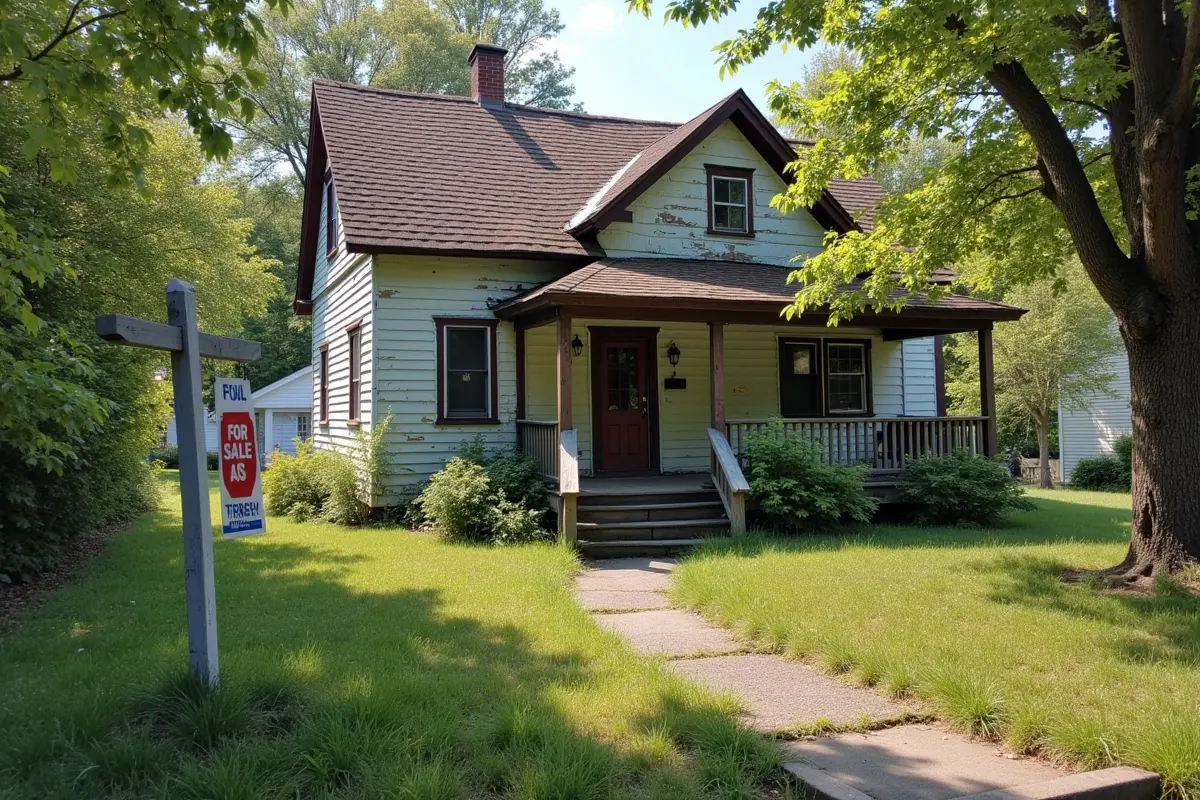
Most homeowners assume they need to fix up their property before selling. Fresh paint, new flooring, updated kitchen—the list goes on. But here’s what a lot of people don’t realize: you can get fair market value for your house exactly as it sits right now.
The key is understanding what “fair value” actually means for a property that needs work, and knowing where to find buyers who pay reasonable prices for homes in as-is condition.
Contents
- 1 What Fair Value Really Means for As-Is Sales
- 2 Finding Buyers Who Pay Fair Prices
- 3 Understanding the Numbers Behind As-Is Offers
- 4 What Makes Your Property More Valuable As-Is
- 5 How to Evaluate Offers on Your As-Is Property
- 6 Common Mistakes That Cost Sellers Money
- 7 Making the Decision That Works for You
What Fair Value Really Means for As-Is Sales
Fair value doesn’t mean you’ll get the same price as a fully renovated house down the street. That would be unrealistic. But it does mean getting a price that accurately reflects what your property is worth in its current state—not a lowball offer that treats your house like it’s worthless just because it needs updates.
The math is pretty straightforward. Take what your house would sell for if it were fixed up, subtract the actual cost of those repairs, subtract a bit more for the time and hassle involved, and that’s roughly your as-is value. Good buyers use this same calculation, which means their offers should make sense when you run the numbers yourself.
Most homeowners are surprised to find their house is worth more as-is than they thought. Even properties that need significant work have value in the land, the location, and the structure itself.
Finding Buyers Who Pay Fair Prices
Not all buyers are created equal when it comes to as-is sales. Some make offers that seem insultingly low. Others pay prices that actually reflect the property’s real value.
The buyers who pay fair prices fall into a few categories. There are investors who plan to fix and flip the property—they need to make money on the deal, but they also need to buy enough inventory to keep their business running. There are buyers who plan to live in the house and don’t mind doing renovations themselves over time. And there are companies that specialize in buying homes quickly for cash.
Professional buyers for distressed houses often make stronger offers than random investors because this is their primary business, not a side hobby. They’re not trying to steal your property—they’re running a business that depends on making reasonable offers that sellers actually accept.
Getting multiple offers is the best way to ensure you’re getting fair value. When you see three similar offers, you know you’re in the right ballpark. If one offer is way lower than the others, that tells you something too.
Understanding the Numbers Behind As-Is Offers
Here’s where it helps to think like a buyer for a minute. If your house would sell for $200,000 fixed up, and it needs $40,000 in repairs, a buyer isn’t going to offer you $160,000. They need to account for their time, their risk, their financing costs, and their profit margin.
A reasonable as-is offer might land somewhere around $140,000 to $150,000 in this scenario. That’s not a rip-off—that’s the market reflecting reality. The buyer has to put in money and effort after they purchase, and they’re taking the risk that repairs might cost more than expected.
The good news is you’re saving money too. You’re not fronting $40,000 for repairs. You’re not paying for staging, extended utility bills, or multiple months of mortgage payments while the house sits on the market. You’re not dealing with contractors, permits, or any of the headaches that come with renovation projects.
When you add up what you’d actually net from a traditional sale after repairs and holding costs, the as-is offer often ends up pretty close—sometimes even better.
What Makes Your Property More Valuable As-Is
Some features increase your as-is value more than others. Location matters a lot. A house that needs work in a good neighborhood is worth considerably more than the same house in a less desirable area. Buyers pay for location because that’s the one thing they can’t change.
The structure itself matters too. A house with good bones—solid foundation, sound roof, decent layout—is worth more as-is than one with major structural issues. Cosmetic problems are relatively cheap to fix. Foundation problems are expensive and scary.
Lot size and configuration can add value even when the house itself needs work. A large lot, good street appeal, or room for expansion makes the property more attractive to buyers who plan to improve it.
Sometimes what you think is a problem isn’t really hurting your value much at all. Outdated kitchens and bathrooms? Buyers who take as-is properties expect that. Old carpeting? They’re probably planning to replace the flooring anyway. Dated paint colors? That’s a weekend project.
How to Evaluate Offers on Your As-Is Property
When offers come in, compare them against what you’d net from a traditional sale. Start with your estimated fixed-up value. Subtract repair costs (get real estimates, not guesses). Subtract realtor commissions—typically 5-6% of the sale price. Subtract closing costs, which run another 1-2%. Subtract the cost of keeping the house for however many months it would take to fix and sell it traditionally.
Now compare that number to your as-is cash offer. The cash offer might be lower on paper, but when you factor in everything you’re saving, the gap usually narrows quite a bit. Sometimes the as-is offer actually puts more money in your pocket.
Time has value too. Getting paid now instead of six months from now might be worth something to you, especially if you need to relocate for work, settle an estate, or just stop paying for a property you’re not using.
Common Mistakes That Cost Sellers Money
The biggest mistake is doing repairs before you know what buyers actually want. Sellers spend thousands fixing things that don’t increase the sale price enough to justify the cost. That new roof might seem necessary, but if a buyer was planning to replace it anyway with their preferred materials, you just spent money for nothing.
Another mistake is only talking to one buyer. Get at least two or three offers so you can see what the market really thinks your property is worth. One lowball offer doesn’t mean your house isn’t valuable—it just means that particular buyer isn’t right for you.
Some sellers also get emotionally attached to what they think their house should be worth based on what they paid for it or what they’ve put into it over the years. The market doesn’t care about any of that. It only cares about what the property is worth today in its current condition.
Making the Decision That Works for You
Selling as-is isn’t right for everyone. If you have the time, money, and energy to fix up your property, and if you’re not in a hurry to sell, a traditional sale after repairs might get you more money. That’s a valid choice.
But if repairs feel overwhelming, if you don’t have cash to front for renovations, or if you need to sell quickly, as-is sales offer a legitimate path to fair value without the stress of managing a renovation project.
The key is being informed about what your property is actually worth in both scenarios, understanding what different types of buyers offer and why, and making a decision based on your specific situation rather than assumptions about what you “should” do.
Your house has value right now, today, exactly as it sits. Finding the right buyer who recognizes that value is just a matter of knowing where to look.