
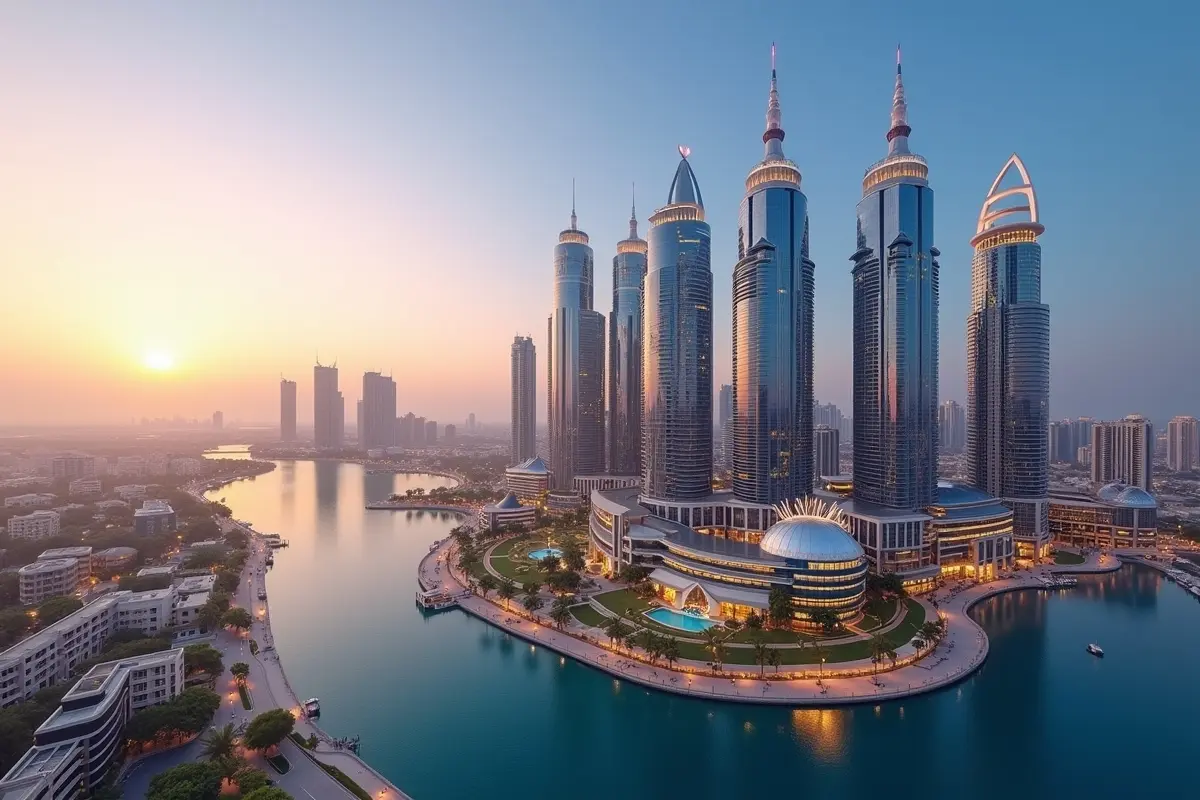
Dubai has become something of a magnet for property investors from around the world, and it’s not hard to see why. The city’s new build market in particular draws serious attention from buyers who might never have considered Middle Eastern real estate before. What started as a regional hub has grown into a global investment destination that competes directly with established markets in London, Singapore, and New York.
The numbers tell part of the story, billions of dollars flow into Dubai’s property sector annually from international sources. But the real reasons go deeper than just impressive statistics. Foreign investors are responding to a unique combination of financial incentives, lifestyle opportunities, and practical advantages that you simply don’t find bundled together in most other cities.
Contents
- 1 The Tax Advantage That Changes Everything
- 2 Residency Visas Tied to Property Ownership
- 3 Payment Plans That Work Differently
- 4 Freehold Ownership for Foreigners
- 5 A Market Built on New Construction
- 6 Political and Economic Stability
- 7 Infrastructure That Keeps Improving
- 8 The Rental Market Reality
- 9 Why This Combination Matters
The Tax Advantage That Changes Everything
Here’s what makes Dubai stand out immediately: no property tax, no income tax, and no capital gains tax on real estate. For investors used to handing over significant chunks of their returns to tax authorities, this creates an entirely different calculation.
Someone selling a property in London might lose 28% to capital gains tax. In Dubai? Nothing. That difference alone can turn a modest investment into a genuinely profitable one. The rental income stays in your pocket too, every dirham earned is yours to keep or reinvest.
This tax structure means that when investors compare potential returns across different markets, Dubai’s numbers start looking very attractive. A 6% rental yield in Dubai effectively becomes worth more than an 8% yield in a heavily taxed jurisdiction once you account for what you actually get to keep.
Residency Visas Tied to Property Ownership
Most countries separate property ownership from residency rights completely. Dubai does things differently. Buy property above a certain threshold, and you become eligible for a residency visa that extends to your immediate family.
The golden visa program has made this even more appealing. Investors meeting specific criteria can secure 10-year residency permits, which is practically unheard of in most places. For families looking to establish a base in a stable, modern city with excellent infrastructure, this connection between property investment and long-term residency solves multiple problems at once.
Parents particularly appreciate this aspect. Their children can attend international schools, they can access quality healthcare, and the family has a legitimate long-term home base without the usual visa renewal headaches that come with extended stays in foreign countries.
Payment Plans That Work Differently
Dubai’s developers have pioneered payment structures that reduce the upfront capital requirement significantly. Instead of needing 75-80% of the purchase price before moving in (which is standard in many markets), buyers often pay as little as 20% during construction with the balance spread over several years.
Some projects offer post-handover payment plans extending 3-5 years after you receive the keys. This means you could theoretically rent out the property and use that income to cover remaining payments. Whether that works in practice depends on rental rates and your specific situation, but the flexibility itself opens doors for investors who have the income but not necessarily hundreds of thousands sitting in a bank account.
For those exploring opportunities in this market, working with specialists who understand these payment structures makes a real difference, https://realtorfarrukh.com/ provides guidance through the various developer offerings and helps match buyers with projects that fit their financial approach.
Freehold Ownership for Foreigners
Unlike many countries that restrict foreign property ownership or limit it to leasehold arrangements, Dubai offers full freehold ownership in designated areas. These freehold zones cover most of the desirable locations where new builds are concentrated.
Owning freehold means exactly what it sounds like, the property is yours outright, forever, with no lease expiration to worry about. You can sell it, rent it, leave it empty, or pass it to your heirs. This level of ownership security matters enormously to international investors who’ve dealt with restrictive property laws elsewhere.
The freehold zones continue expanding too. Areas that were previously leasehold-only have converted, and new developments almost exclusively offer freehold status. The government clearly understands that foreign investment depends on these ownership guarantees.
A Market Built on New Construction
While established markets see most transactions involving existing properties, Dubai’s landscape tilts heavily toward new builds. Developers launch major projects constantly, creating steady inventory of modern properties with contemporary layouts and up-to-date amenities.
This focus on new construction appeals to investors for several reasons. New properties require less immediate maintenance, come with developer warranties, and typically feature energy-efficient systems that reduce operating costs. The buildings are designed for current lifestyle expectations rather than being retrofitted from older standards.
The sheer volume of new development also means choices. Want a studio near the marina? A three-bedroom family apartment in a school-district area? A luxury penthouse with Burj Khalifa views? The variety available in new builds covers pretty much every budget and preference.
Political and Economic Stability
Investors parking money in real estate want confidence that their investment won’t evaporate due to political upheaval or economic collapse. Dubai, and the broader UAE, has maintained remarkable stability in a region known for volatility.
The government has consistently supported the real estate sector through policy, infrastructure investment, and regulatory frameworks that protect buyers. When the market softened during global downturns, authorities responded with measures to stabilize prices and restore confidence rather than letting things spiral.
This track record matters. International investors have watched Dubai navigate challenges and come out stronger, which builds trust that future obstacles will be handled competently.
Infrastructure That Keeps Improving
The city’s infrastructure development hasn’t slowed down. New metro lines, road networks, and public facilities appear regularly. Major projects like the expansion for Expo 2020 (which actually happened in 2021-2022 due to the pandemic) delivered permanent infrastructure improvements that benefit property values long-term.
When transportation improves, previously distant neighborhoods become more accessible. When new commercial centers open, surrounding residential areas gain amenities. This constant evolution means properties in up-and-coming areas can appreciate significantly as infrastructure reaches them.
The Rental Market Reality
Dubai’s rental market stays active due to the city’s large expatriate population and constant influx of professionals. Most residents rent rather than own, creating consistent demand for rental properties.
Yields vary by area and property type, but generally range from 5-8% annually, which beats most major global cities. The key is choosing locations with sustained demand, areas near business districts, good schools, or major transport links tend to maintain occupancy better.
Short-term rentals through platforms have also become viable in certain areas, offering potentially higher returns for investors willing to manage or pay for property management services.
Why This Combination Matters
What makes Dubai particularly attractive isn’t any single factor, it’s how these elements combine. The tax benefits plus flexible payment plans plus freehold ownership plus residency options create a package that’s tough to match elsewhere.
An investor from Europe or Asia can essentially buy into a modern, well-governed city with excellent infrastructure, secure property rights, zero property taxes, and the bonus of gaining residency for their family. That combination simply doesn’t exist in most other markets at this scale.
The new build focus means they’re buying modern inventory rather than aging properties, and the active rental market provides genuine income potential rather than just capital appreciation hopes.
For international investors looking at global property allocation, Dubai increasingly makes sense not as an exotic alternative but as a core holding that delivers both practical returns and strategic advantages that traditional markets struggle to provide.